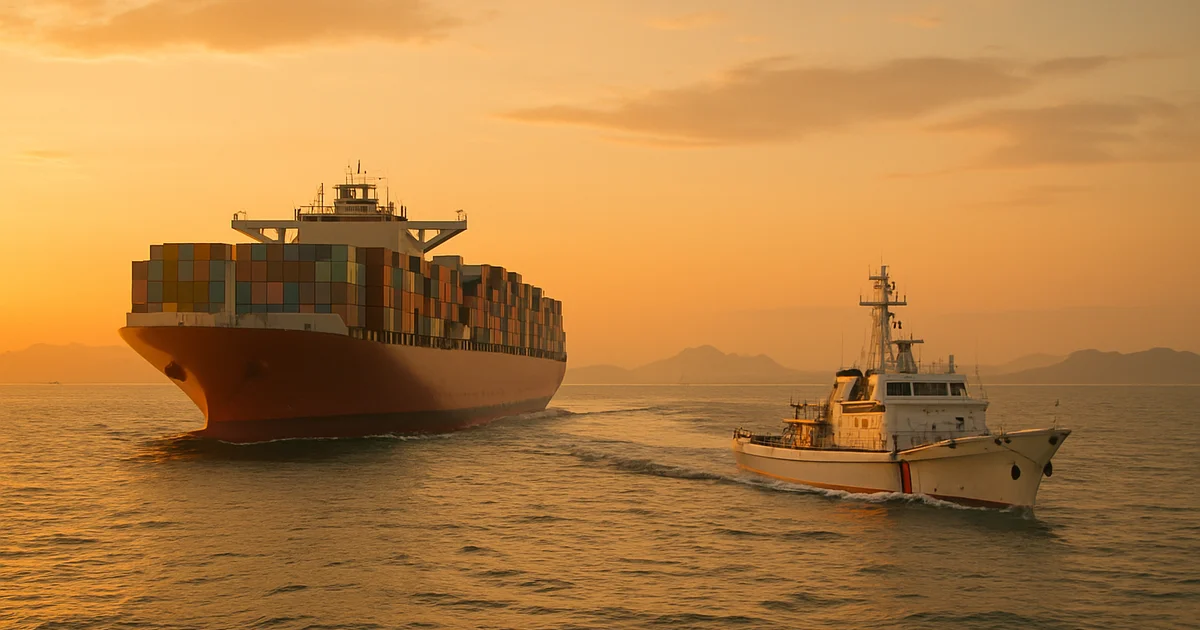
The China Coast Guard (CCG) has been reported to have rammed a Philippine patrol vessel in the contested waters of the South China Sea. This incident marks another escalation in the ongoing maritime tensions between Beijing and Manila, highlighting the fraught nature of territorial claims in this strategic waterway.
The altercation occurred as the Philippine vessel was conducting a routine patrol near the Second Thomas Shoal, an area within the Philippines' exclusive economic zone but claimed by China under its expansive "nine-dash line" claim. The Philippine Navy has not released a detailed account of the incident, but initial reports suggest that no crew members were injured, and the vessel sustained minor damage.
Chinese Ministry of Foreign Affairs spokesperson Wang Wenbin stated that the Chinese vessel acted in line with Chinese laws, asserting their territorial rights. According to Wang, the Philippine vessel ignored multiple warnings and engaged in actions that were considered provocative by the Chinese authorities.
Philippine Foreign Secretary Teodoro Locsin Jr. condemned the incident, urging China to respect international maritime laws, including the United Nations Convention on the Law of the Sea (UNCLOS). Locsin has called for diplomatic resolutions through bilateral talks, reinforcing the significance of peaceful negotiations over maritime disputes.
Why this matters
The confrontation signifies a departure from the usual non-aggressive maritime protocol and amplifies geopolitical tensions in the South China Sea, a critical corridor for global trade routes. The actions of the China Coast Guard could further strain Sino-Philippine relations and incite a broader regional security reappraisal, especially for the Association of Southeast Asian Nations (ASEAN) member states reliant on these waters for commerce.
For maritime operators, the risk associated with voyages in disputed waters requires recalibration of security strategies and insurance evaluations. The incident could influence chartering decisions and route selections, potentially affecting shipping costs and schedules in the region. The escalating situation underscores the importance of vessel tracking and crisis management procedures for operators navigating these contested waters.
The strategic nature of the South China Sea, through which nearly one-third of global commercial shipping traffic passes, elevates the importance of stable maritime governance frameworks and risk mitigation strategies for shipping companies and flag states.
The maritime industry now observes closely how regional powers, including those in ASEAN, will respond to bolster navigational security and ensure that international maritime laws are upheld as tensions continue to simmer.