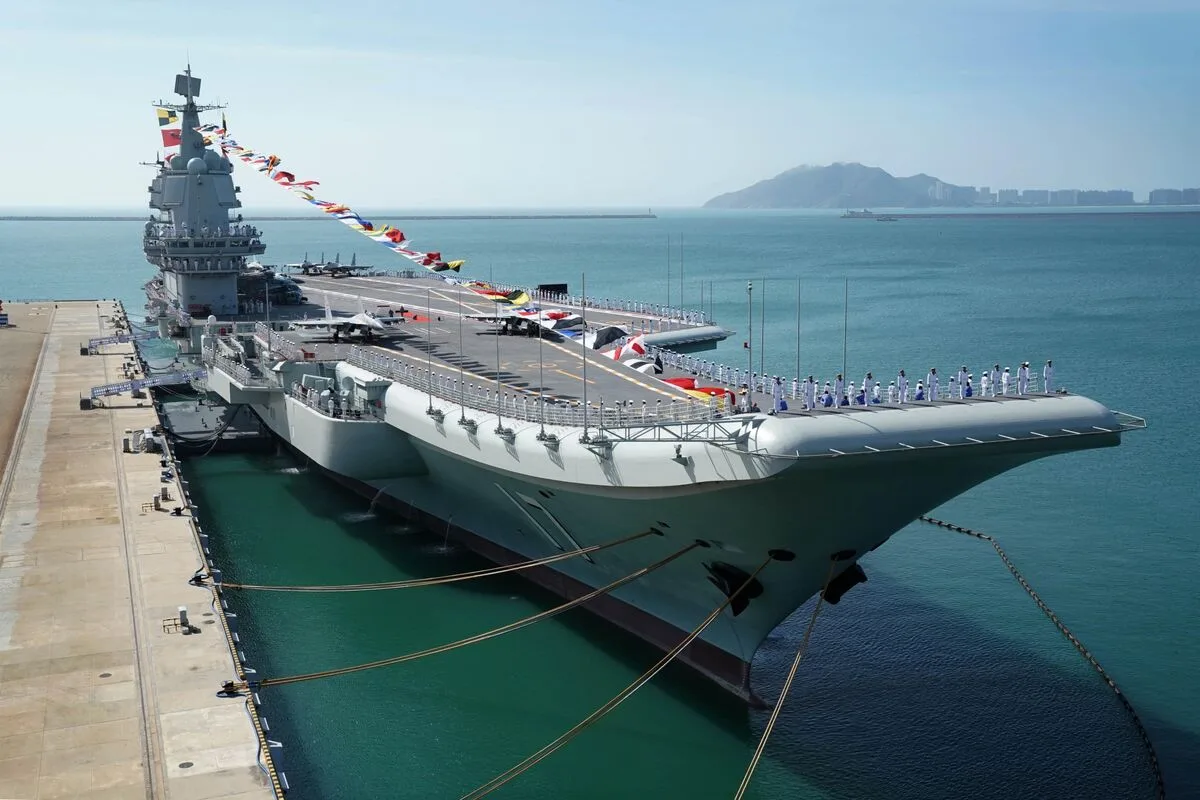
The Chinese navy has conducted an unprecedented dual aircraft carrier mission in the Pacific Ocean, according to Japan's Joint Staff Office. The deployment included the *Shandong*, accompanied by another undisclosed carrier, and occurred near remote Japanese islands, marking the first simultaneous operations of this kind by China in the region. The *Shandong* was observed sailing into the Pacific over the weekend and conducting flight operations involving fighter jets and helicopters within Japan's exclusive economic zone (EEZ) around the Okinotori Atoll. These exercises were spotted on Monday and lie approximately 1,740 kilometers south of Tokyo.
The maneuvers have sparked concern in Japan, given the presence of Chinese carriers conducting exercises close to Japanese territorial waters. Japan continues to monitor these developments carefully, with the Joint Staff Office describing the activities as indicative of China’s advancing naval capabilities. The dual-carrier operation demonstrates Beijing's growing proficiency in executing complex maritime exercises far from its home waters, drawing attention to China's expanding strategic scope in the Asia-Pacific region.
While neither carrier entered Japan’s territorial waters directly, their operations within the EEZ are viewed as a notable escalation in China’s military posturing. Japan's defense apparatus, including its Self-Defense Forces, remains vigilant in monitoring and assessing these activities amid fears of destabilization in the region. The strategic nature of the Okinotori Atoll, located in a critical maritime chokepoint, underscores the importance of these developments as tensions between regional powers continue to rise.
The Asia-Pacific region has become increasingly contested, with Japan and China both ramping up investments in naval capabilities. For Japan, the deployment of advanced assets in response to such threats is critical to maintaining regional stability. As China's navy operates further afield and demonstrates greater capacity for power projection, key stakeholders in the region are recalibrating defense postures to adapt to an evolving security environment.
Why this matters
The dual-carrier operation signals a significant enhancement in China's naval operational capability, emphasizing its ability to manage complex carrier-based exercises far from its mainland bases. This shift represents an expanding strategic reach that could alter the balance of power in key Pacific maritime corridors. For shipowners and operators traversing the region, the increased military activity presents heightened geopolitical risks that may affect routing decisions and insurance premiums.
Regional powers such as Japan and the United States are likely to adjust their maritime defense strategies to counter China's expanding naval presence. This could lead to greater naval patrol activity and joint military exercises in contested maritime zones, adding complexity to civilian operations in already congested waterways. Commercial shipping interests in the area should remain alert to potential disruptions stemming from overlapping military maneuvers.
With heightened naval activity near sensitive areas like Okinotori Atoll, the possibility of geopolitical miscalculations rises. Ship operators and insurance underwriters will face additional challenges as war-risk premiums could increase, particularly for vessels transiting waters in proximity to Chinese and Japanese military zones.
The deployment underscores the strategic importance of the Asia-Pacific region and highlights the need for ongoing vigilance among maritime stakeholders. For ship operators, understanding the security developments in these waters and their implications for vessel routing and cargo safety will be critical in the months ahead.