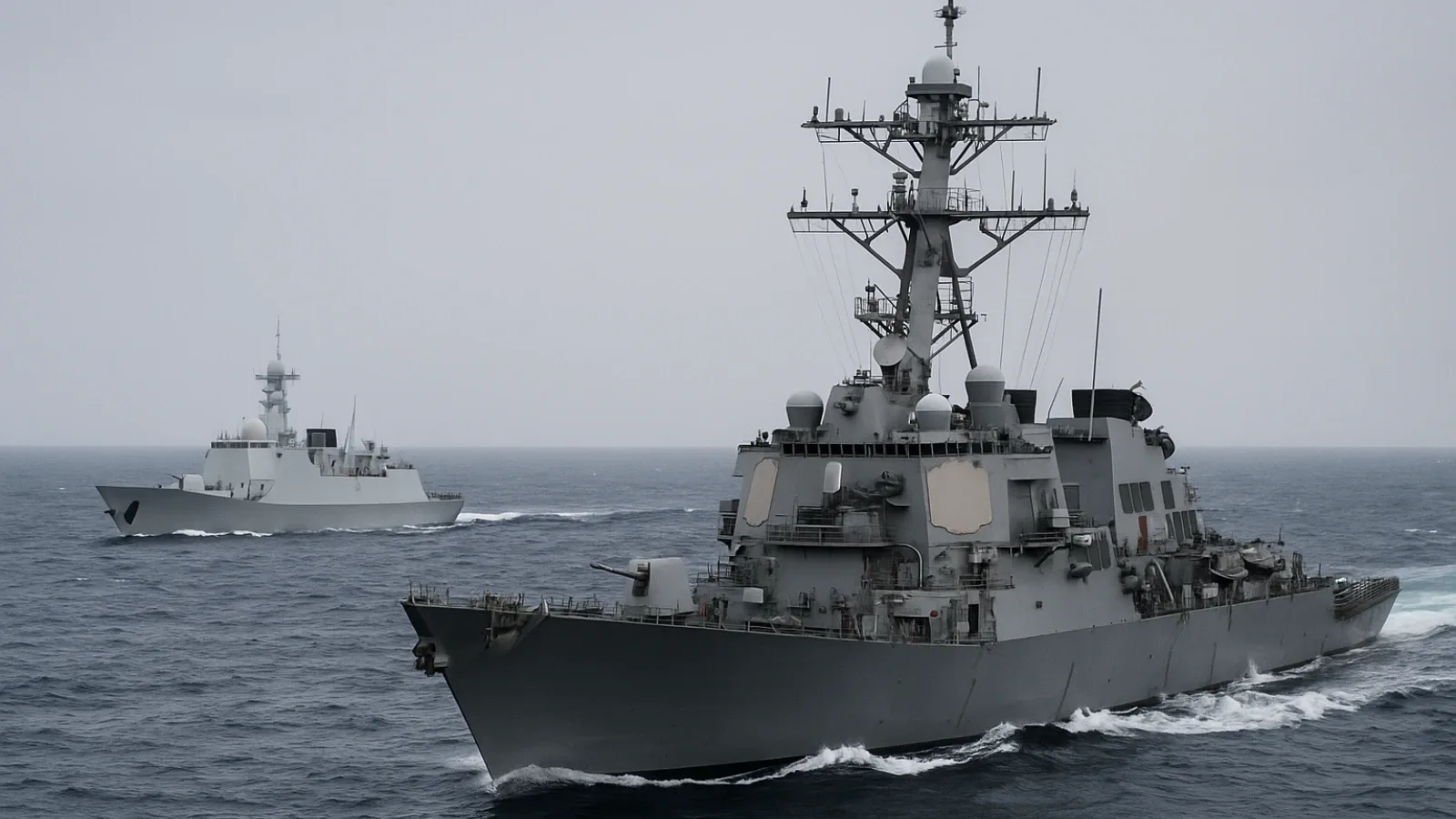
China has escalated its maritime legal critique by publishing a detailed report challenging the legitimacy of U.S. "freedom of navigation" operations. Produced by the China Institute for Marine Affairs under the Ministry of Natural Resources, the assessment disputes the foundation of U.S. practices in international law, describing them as instruments of military coercion and a threat to regional stability. Former director general Zhang Haiwen characterizes the operations as prioritizing American interests over the legitimate rights of coastal states, dubbing them an exercise in hegemonic power disguised in legality.
The report critiques U.S. legal positions on eleven critical issues, including the rules governing the innocent passage of warships, transit through archipelagic sea lanes, and military operations within exclusive economic zones (EEZs). It argues that U.S. interpretations often diverge from established international norms, asserting unilateral standards that are inconsistent with global maritime practices. Among the contentious claims cited is the U.S. notion of "international waters" and "high seas corridors," which, the report argues, undermines the authority of coastal states in sensitive areas such as the Taiwan Straits.
Highlighting perceived double standards, the report points to U.S. military utilization of "freedom of overflight" within air defense zones while condemning similar actions by non-allied nations. The assessment also references specific incidents, including the expulsion of the USS Higgins, a U.S. destroyer, by the Chinese military after an alleged incursion into Chinese territorial waters. Additionally, the report criticizes the U.S. for invoking the United Nations Convention on the Law of the Sea (UNCLOS) to justify its actions despite not ratifying the treaty, calling into question the consistency of U.S. adherence to international maritime law.
The report traces the origins of the U.S. Freedom of Navigation Program to 1979, highlighting its use of military assets to challenge what Washington deems "excessive maritime claims." Deputy director Xu Heyun emphasized that the main goal behind the publication was to restore maritime order based on a fair application of international law, accusing the U.S. of undermining global norms through selective interpretations and aggressive tactics.
Why this matters
The critique issued by China directly impacts the balance of maritime powers in contested regions like the South China Sea and the Taiwan Straits, where shipping and geopolitical conflicts routinely intersect. If China's legal challenge gains traction, it could lead to heightened scrutiny of U.S. operations and their adherence to international maritime laws by other coastal states.
For shipowners and operators, the escalating tensions between two global powers raise risks for trade routes across contested or strategically sensitive waters. Uncertainty regarding the enforceability of maritime laws in disputed areas could complicate navigation planning, insurance coverage, and security arrangements.
Additionally, the focus on selective compliance with UNCLOS could reignite debates over whether major non-signatory states like the U.S. and others should either ratify the treaty or abandon reliance on it as a legal framework. This dynamic directly influences charterers, insurers, and maritime law practitioners operating in regulatory gray zones.
Operators transiting through contentious zones may need to reassess their risk management frameworks as geopolitical tensions influence commercial access and freedom of movement. Monitoring legal developments from both sides will become critical to navigating the evolving maritime landscape.
Looking ahead, this report signals a concerted diplomatic and legal effort by China to challenge long-standing American maritime practices, with implications for international norms of maritime governance. Stakeholders should watch for any ripple effects in multilateral maritime treaties or regional enforcement policies that might alter navigation rights and operational risk. Industry players must weigh the strategic importance of route reliability alongside heightened regional sensitivities.