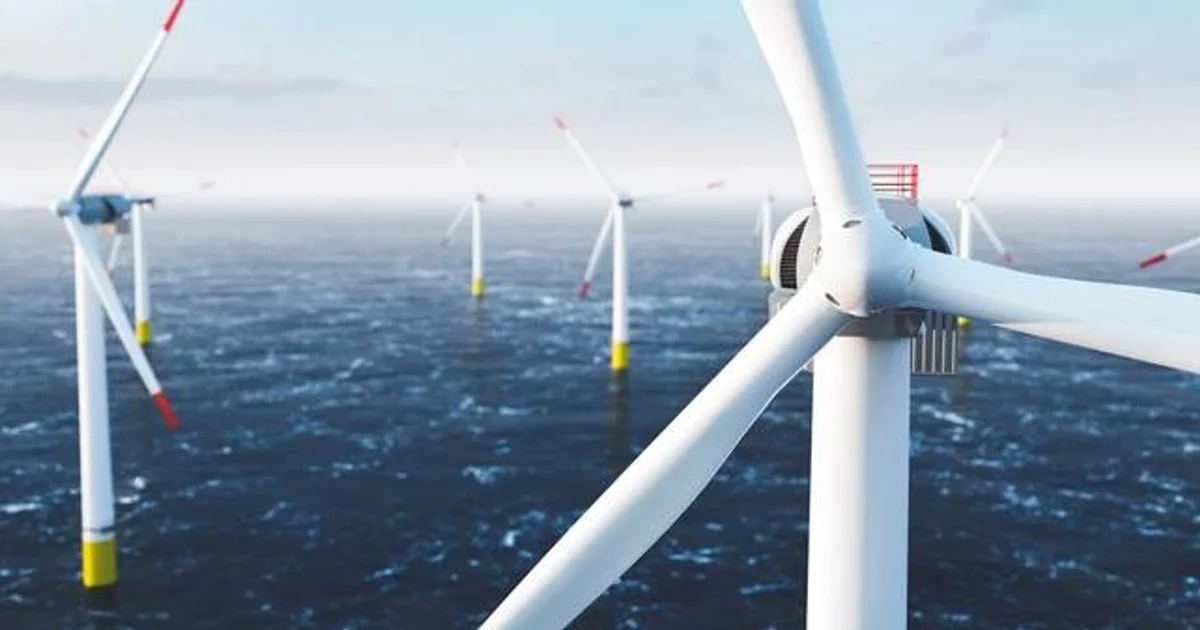
The UK is deploying advanced ocean robots known as gliders to investigate wake effects caused by offshore wind farms, as part of a wider effort to understand the environmental impacts of such renewable energy installations. Currently, the gliders are operating near a major offshore wind farm located off Scotland's east coast in the North Sea. This fieldwork is central to the PELAgIO project, short for Physics-to-Ecosystem Level Assessment of Impacts of Offshore Windfarms, run by Professor Beth Scott of the University of Aberdeen and funded by the UK’s National Environmental Research Council (NERC).
Led by Dr. Charlotte Williams, the research involves deploying gliders outfitted with advanced sensors to collect detailed underwater data essential for assessing the marine ecosystem. This data, combined with sophisticated computer simulations, is intended to measure how turbine placements alter key environmental factors, including water mixing. Such mixing drives marine nutrient cycles essential to the food chain, heavily influencing phytoplankton growth during warmer months. Researchers note that any disruptions to this biological foundation could cascade through the food web, ultimately threatening ecosystem health.
The gliders, ranging in size from 1.5 to 2 meters, operate through buoyancy adjustments, enabling them to maneuver through depths of up to 1,000 meters for extended periods. Deployed from Arbroath, Scotland, these robots have been actively collecting data in the Firth of Forth since April 2023. Equipped with sensors measuring oxygen, temperature, salinity, and chlorophyll levels, the gliders regularly surface to transmit gathered data back to researchers and receive updated mission instructions. Their energy-efficient design allows for continuous multi-dimensional monitoring, creating an evolving and detailed understanding of offshore wind farms' ecological impacts.
The initiative not only addresses current environmental impacts but also seeks to influence policy and planning. Data obtained could guide future wind farm placement by identifying areas of ecological sensitivity while optimizing turbine deployment for minimal disruption. Recent glider observations of marine heat waves in UK waters further illustrate their capability to support real-time environmental studies, enhancing their utility for monitoring broader climatic trends.
Why this matters
Offshore wind farms are critical in the transition to renewable energy, but their unintended impacts on marine ecosystems could have downstream effects for industry stakeholders. For fisheries, disruptions to phytoplankton—a cornerstone of the ocean's food chain—could diminish fish stocks, thereby impacting livelihoods dependent on sustainable fishery operations. Such data assists policymakers in balancing ecological conservation against renewable energy infrastructure expansion.
For offshore wind farm operators, identifying ecologically viable zones for development is integral to reducing opposition and regulatory delays. Insights generated from the PELAgIO project help avoid economically costly missteps by providing data-driven evidence for sustainable turbine placement and operation. Additionally, real-time monitoring technologies showcased by the robotic gliders add resilience against unforeseen climate events which could alter marine conditions.
Ultimately, the PELAgIO project underscores the necessity of incorporating environmental research into renewable energy strategies. As the data analysis progresses, findings from the deployed gliders will likely play a crucial role in shaping Britain’s efforts to harmonize energy security with marine ecological health, informing industry standards for decades ahead.