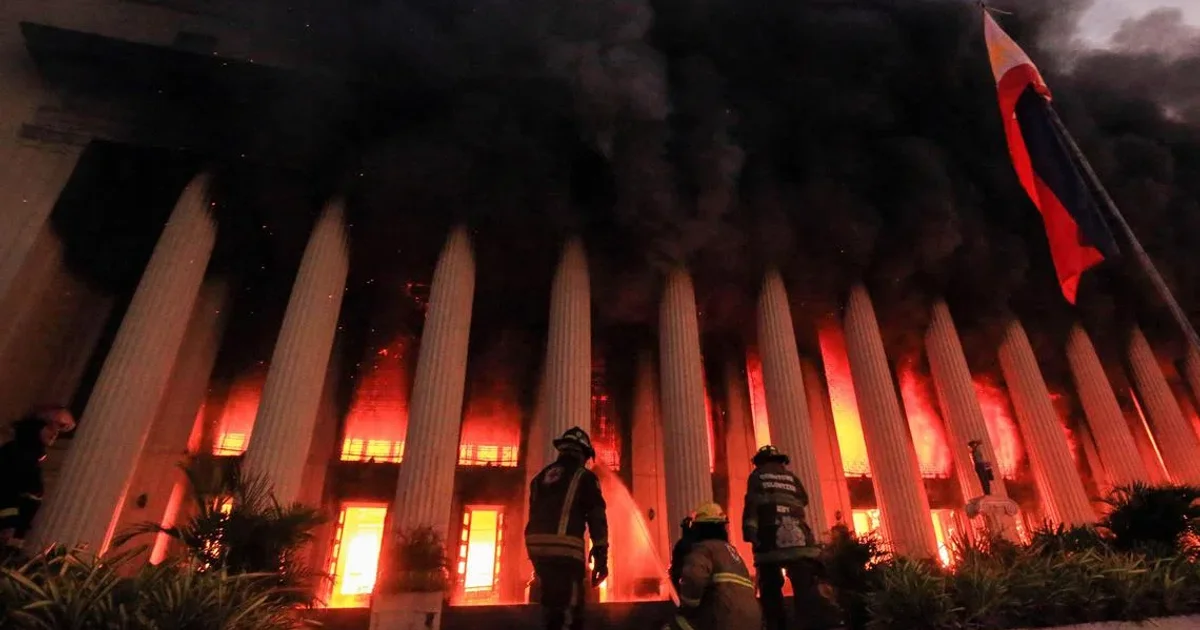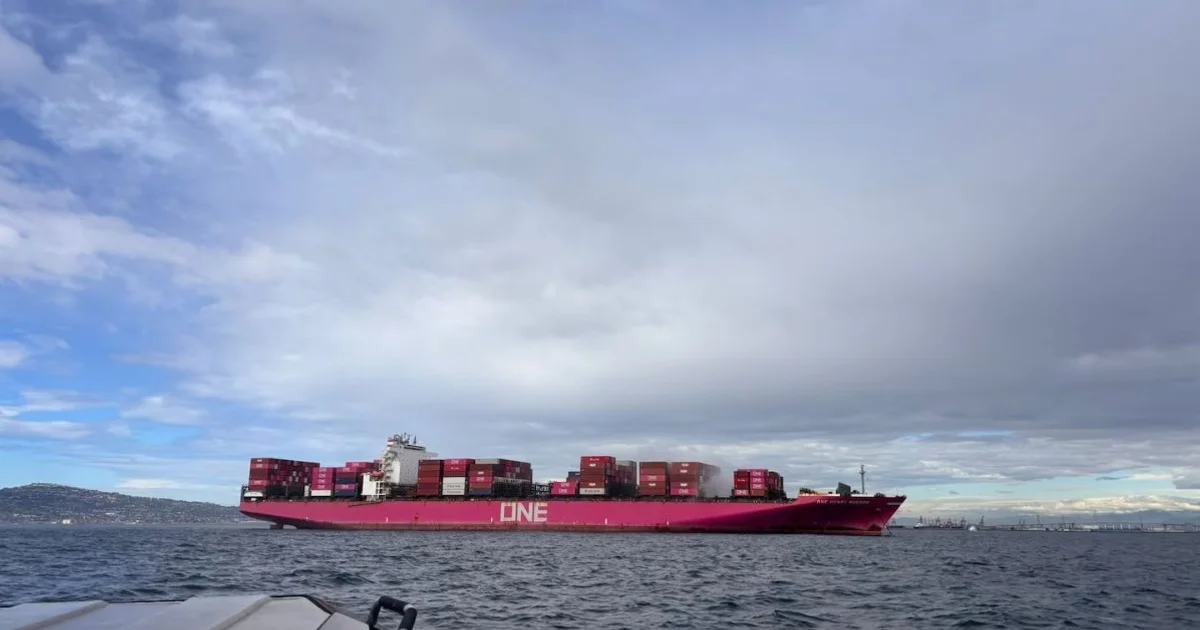
A serious fire broke out aboard the container vessel ONE Henry Hudson late Friday evening while docked at the Port of Los Angeles, triggering a large-scale emergency response from both land and water-based firefighting units. The blaze, first detected at approximately 6:38 PM, rapidly escalated after an apparent electrical malfunction below deck ignited multiple lower compartments, culminating in a mid-deck explosion that disabled the vessel’s internal power systems and crane operations.
Nearly 200 firefighters were mobilized, coordinating their efforts with fireboats that targeted the flames from the harbor. Meanwhile, Hazardous Materials (HazMat) teams assessed the air quality due to the identification of potentially dangerous materials stored across several container bays. Given the proximity of residential zones, authorities issued a temporary shelter-in-place order for neighboring communities as the fire raged.
The vessel’s 23 crew members were successfully evacuated without injury, and tugboats later repositioned the ship to an anchorage near Angel’s Gate Lighthouse, reducing risks to port infrastructure while allowing firefighters to maintain cooling operations overnight. The Port of Los Angeles lifted the shelter-in-place advisory early Saturday morning as conditions stabilized.
While response efforts continued, four out of the port’s seven container terminals resumed service before the weekend’s end, mitigating disruption to the busy trade hub. The coordinated emergency response included multiple agencies working in tandem to manage the fire’s impact in one of the United States' most critical maritime gateways.
Why this matters
The incident underscores the vulnerability of large container vessels to electrical hazards and the operational risks posed by fires involving hazardous cargo. For ports like Los Angeles, which operate at high throughput levels, disruptions such as these risk severe ripple effects across supply chains. The temporary suspension of operations at four container terminals illustrates the scale of potential disruption when vital infrastructure is imperiled.
Additionally, the strategic decision to relocate the vessel highlights the importance of contingency anchorage zones near ports, ensuring emergency firefighting operations can continue without endangering nearby assets. For shipowners, this incident demonstrates the necessity of stringent oversight for onboard electrical systems and cargo hazard protocols to prevent similar occurrences.
Looking ahead, authorities and shipowners operating in major ports may face added pressure to bolster fire mitigation systems, including enhanced crew training for electrical fault detection and expedited deployment of port-side fire response resources. For ports handling high volumes of hazardous cargo, interagency response frameworks like the one demonstrated in Los Angeles will be critical to minimizing future risks and operational downtime.