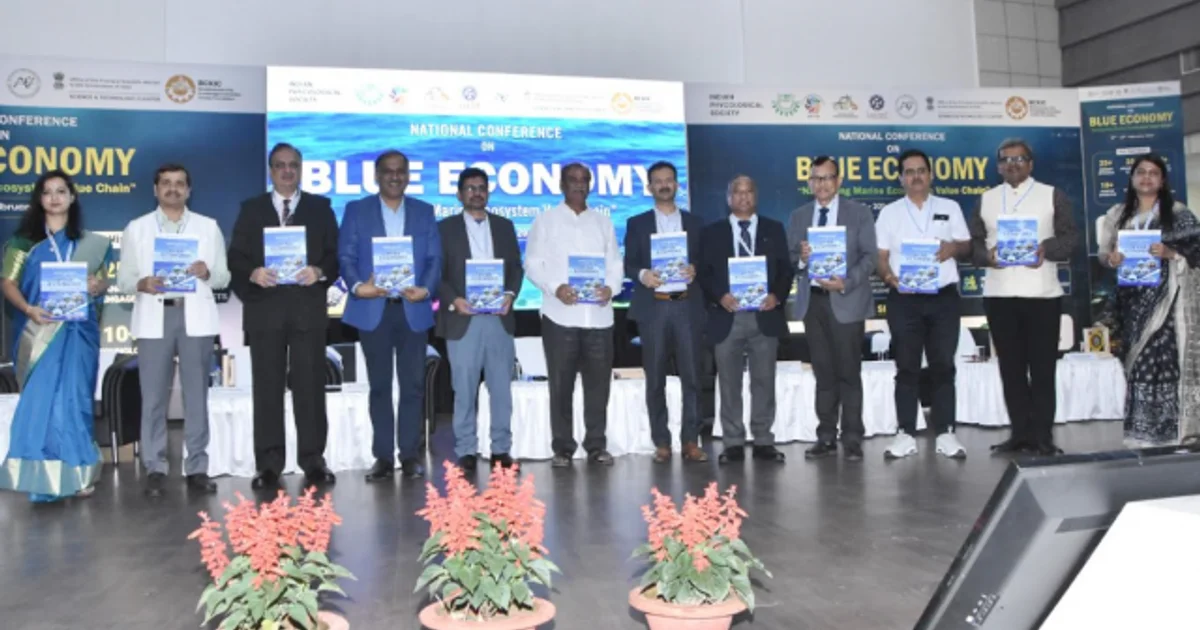
KIIT-Deemed University in Bhubaneswar launched a national conference on the Blue Economy, centered on the theme of “navigating the marine ecosystem value chain.” The multi-day event gathers leading stakeholders and experts to examine sustainable utilization of marine resources and the opportunities within India’s coastal economic framework. Among the distinguished speakers were Dr. Parvinder Maini, Scientific Secretary at the Office of Principal Scientific Adviser to the Government of India; Dr. M.V. Ramanamurthy from the Ministry of Earth Sciences; and Dr. Jitendra Kumar, Managing Director of DBT-BIRAC. The conference is the result of collaboration between organizations such as the Indian Phycological Society, KIIT University, DBT-Institute of Life Sciences, and the National Institute of Oceanography.
Odisha’s Minister of Science and Technology, Ashok Panda, highlighted the state’s prominent role in advancing blue economy initiatives. With Odisha boasting a coastline of 480 kilometers, Panda emphasized the strategic importance of aquatic resource management, bolstered by the state’s recently unveiled biotech policy. He stated that Odisha’s marine assets, including its coastal biodiversity such as mangroves and rich aquatic habitats, position it as a natural leader in sustainable marine economic practices. Panda noted the regional economic impact of marine resources and projected a substantial allocation of ₹3.50 lakh crore to develop the marine economy.
Speaking on the global significance of the blue economy, Dr. Maini underscored that maritime ecosystems sustain 40% of the global human population residing in proximity to oceans. Oceans are vital for energy generation, food production, and global logistics, accounting for 80% of the world’s trade transportation. He cited that the blue economy contributes an estimated $6 trillion annually to global GDP and advocated for a collective commitment to protecting marine environments while fostering sustainable economic pathways.
Prof. Mrutyunjay Suar, Director of R&D and Innovation at KIIT, pointed out that Odisha serves as an ideal launchpad for blue economy advancements owing to its geographical positioning and natural resources. Expanding on this perspective, Dinabandhu Sahoo, President of the Indian Phycological Society and senior professor at Delhi University, revealed that the global valuation of the blue economy exceeds $24 trillion, demonstrating its significant future potential for human development.
Why this matters
The conference underscores the increasing recognition of the blue economy’s vital role in sustainable development. For maritime stakeholders, its emphasis on resource utilization, including marine biodiversity and aquatic ecosystems, signals strategic opportunities for new investment streams, research ventures, and economic collaboration. Coastal regions like Odisha, with abundant aquatic resources, are poised to play pivotal roles in future infrastructure projects relating to fisheries, aquaculture, and renewable ocean energy.
By shaping policy frameworks, such as Odisha’s biotech policy, governments are offering foundational support for operators and developers within the marine value chain. This unlocks potential synergies between maritime logistics, environmental protection, and economic growth while drawing attention to international trade corridors influenced by coastal economies and their ecosystem services.
With the blue economy projected to continue expanding, operators and stakeholders must assess emerging markets for sustainable marine technologies, align with environmental compliance factors, and leverage coastal infrastructure for enhanced resource monetization.
As India's coastal states—especially Odisha—begin implementing targeted blue economy policies, shipowners, port operators, and manufacturers should prepare for regulatory shifts addressing sustainability and ecosystem management. Tracking developments from institutional conferences and policy rollouts will be essential for capturing growth opportunities in this evolving sector.