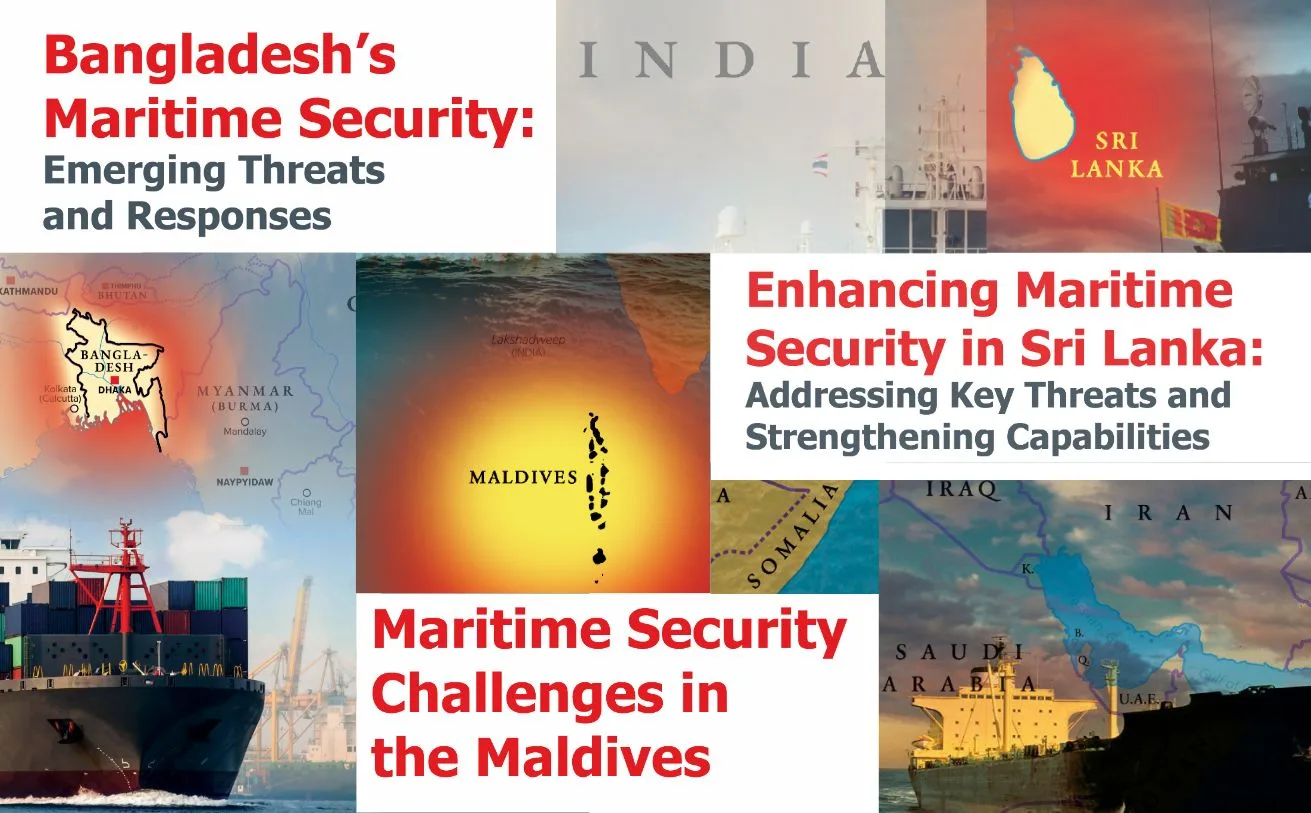
The East-West Center has released a series of Occasional Papers delving into the maritime security challenges faced by smaller South Asian nations, specifically Bangladesh, the Maldives, and Sri Lanka. Edited by Frank O'Donnell, the research underscores the critical role maritime security plays in ensuring regional stability and facilitating continued economic growth in these strategically located states.
Bangladesh has positioned itself as a significant stakeholder in the Bay of Bengal (BoB), a maritime zone vital for the country’s economy. According to Delwar Hossain of the University of Dhaka, 90 percent of Bangladesh’s trade and all energy transportation hinge on this region. The country’s strategic importance is heightened by its proximity to the Indian Ocean, and the resolution of territorial disputes with Myanmar and India has bolstered its maritime status. However, challenges persist in the form of non-traditional security threats, such as human trafficking and vulnerabilities within its ports. Ensuring maritime security is seen as crucial to the nation’s economic stability, with calls for increased collaboration at both the regional and international levels.
In the Maldives, maritime security issues are heavily intertwined. Rasheeda M. Didi of the South Asia Focus Network identifies illegal, unregulated, and unreported (IUU) fishing, drug trafficking, and piracy as significant threats to the island nation's security and economic sustainability. Natural disasters compound the challenges, further exacerbating risks to critical infrastructure. Security efforts depend on international cooperation, with India, Japan, and the United States actively contributing to capacity-building initiatives aimed at mitigating these threats.
Sri Lanka, situated at the nexus of trade routes in the Indian Ocean, plays a pivotal role in regional maritime security. Chulanee Attanayake of Swinburne University of Technology notes that the country faces growing security threats, ranging from illegal fishing to transnational crimes and environmental degradation. As geopolitical tensions mount in the Indo-Pacific, Sri Lanka’s strategic position renders it central to addressing great power competition while enhancing its maritime resilience. Attanayake’s analysis evaluates Sri Lanka’s ability to navigate these challenges through bilateral and multilateral partnerships, all while safeguarding its economic interests.
Why this matters
The publication highlights the shared but uniquely complex maritime security challenges confronting Bangladesh, the Maldives, and Sri Lanka. Bangladesh’s reliance on the Bay of Bengal for trade and energy underscores its vulnerability to illicit activities in the region, presenting operational risks to shipping companies and traders. Non-traditional threats such as trafficking and port vulnerabilities require sustained investment in monitoring and response capabilities.
For the Maldives, the prevalence of IUU fishing and piracies poses direct risks to maritime operators transiting the surrounding waters. The nation’s dependency on external security assistance stresses the importance of multilateral agreements to protect both vessels and environmental resources critical to economic stability. International cooperation, notably from India and Japan, will remain central to mitigating these risks.
Sri Lanka’s strategic positioning at key shipping crossroads impacts both regional and global trade dynamics. As the Indo-Pacific witnesses increased geopolitical rivalry, shipping routes through the Indian Ocean face potential disruptions. Investments in maritime surveillance and capacity-building partnerships are therefore vital to ensuring uninterrupted commercial flows.
For maritime operators, shipowners, and regional authorities, addressing these challenges will require tailored security strategies, enhanced international partnerships, and prioritised investments in surveillance technologies and workforce expertise. The evolving security dynamics demand collective action to prevent disruptions in trade routes and safeguard economic growth in South Asia.