Optimizing Blockchain IoT Performance in Port Operations through Cross-Chain Data Transmission
The implementation of Cross-Chain Technology (CCT) link models specifically tailored for blockchain-enabled Internet of Things (IoT) systems in port environments aims to refine load adaptation methods and optimize operational efficiency. The model harnesses sophisticated load-balanced scheduling techniques, enabling seamless adjustments to dynamic parameters within CCT links. This innovation ensures heightened performance in blockchain IoT systems, particularly in high-demand port scenarios.
Model Construction
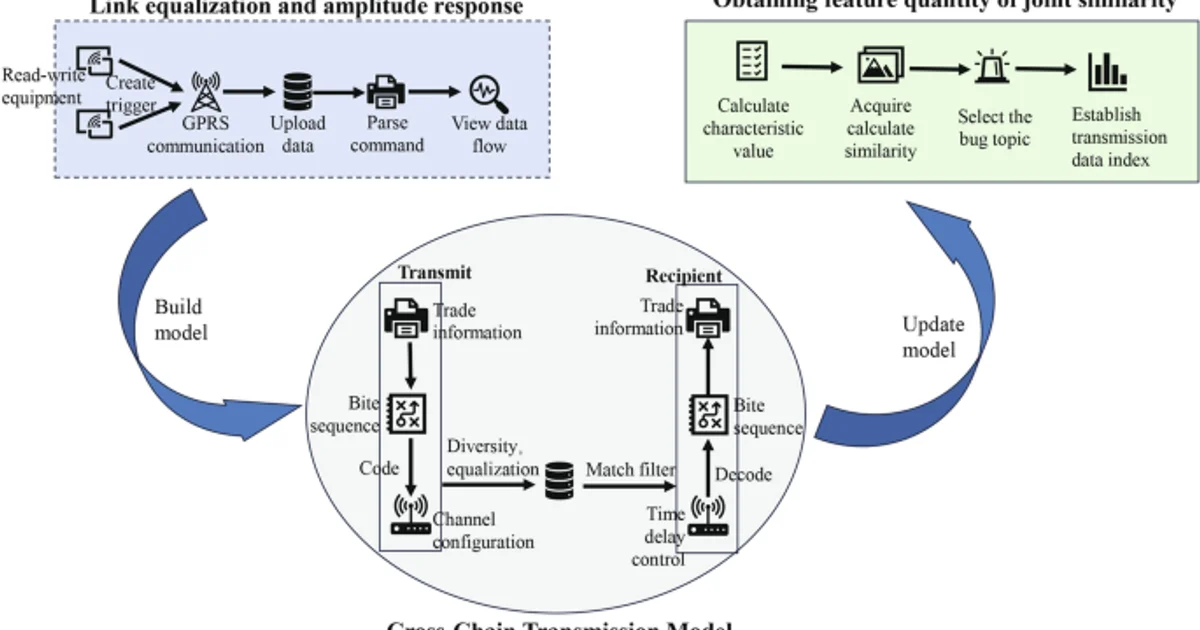
The foundation of the CCT link model is built upon an equilibrium-focused configuration tailored to the spatial and operational dynamics unique to port areas. Researchers have incorporated methodologies such as fuzzy link balanced adjustment and distributed integration to evaluate vital spatial characteristics. These methods ensure the model precisely reflects amplitude responses across CCT connections, forming a stable system that aligns with the congestion and resource distribution challenges of ports.
Optimal Control with Adaptive Scheduling
The adaptive equilibrium scheduling embedded within the model analyzes potential interference sources that could degrade performance. By leveraging bit sequence scheduling, the system achieves optimal control over network transmissions. Parameters like time slice size and block matching are central, shaping the model’s efficiency in robust resource environments. Techniques such as equidistant discretization and discrete processing mitigate extreme value outliers, facilitating a consistently stable model output even in fluctuating port conditions.
Cross-Chain Link Balance Design
Key efforts in model refinement involve analyzing the interplay between transmission delay and operational environmental characteristics. Through methods like joint similarity measurement, researchers evaluate random time interval impacts on CCT performance. Iterative formulas developed during this process help balance links within the network, optimizing forward transmission and long-distance data coverage. Metrics, such as signal-to-noise ratio tracking, are pivotal in ensuring effective communication across extended cross-chain networks.
Distributed Intelligent Scheduling Mechanism
The paper unveils a Distributed Intelligent Scheduling Mechanism, leveraging Graph Neural Networks (GNN) integrated with smart contracts. Unlike centralized systems, this mechanism enhances scalability and fault tolerance. Node states—including data such as CPU availability and bandwidth—are broadcast within the network and processed by the GNN to achieve optimal load distribution. Regular iterative updates empower the system to respond dynamically to real-time port conditions, ensuring consistent operational performance.
Task Distribution and Execution
Post-GNN modeling, nodes generate a task transfer matrix, effectively forecasting load allocation across the network. Smart contracts then execute these task distribution strategies, ensuring equilibrium by offloading tasks from overloaded nodes to those with excess capacity. Continuous monitoring and integrated feedback loops allow dynamic adjustments to adapt to varying operational demands.
Why this matters
The introduction of the CCT link model represents a transformative approach to managing blockchain IoT systems in port environments, addressing both technological and operational challenges. Given the significant growth in maritime trade volumes, ports are becoming increasingly reliant on IoT devices for monitoring and logistics management. The CCT link model’s focus on load adaptation provides a critical solution for mitigating operational delays and ensuring consistent data transmission.
The use of distributed intelligent scheduling with GNN and smart contracts furthers this efficiency by decentralizing network load management. This approach minimizes vulnerabilities associated with centralized systems, such as bottlenecks and single points of failure, while improving scalability and adaptability. For port operators and IoT developers, the robust capabilities of the model reduce downtime and enable more precise control over increasingly complex workflows.
The model also highlights crucial advancements in interference resolution and parameter management. By tightly controlling data transmission delays, operators can ensure continuity in IoT-driven port operations, reducing risks of cargo mismanagement or disruptions in supply chain visibility.
Finally, this framework strengthens infrastructure resilience against dynamic operational challenges, ultimately contributing to enhanced productivity and reliability within port ecosystems.
As more ports adopt blockchain-enabled IoT systems, the scalable and adaptive features of the CCT link model are likely to become foundational for optimizing network operations. Researchers and industry stakeholders are poised to develop further iterations of this approach, integrating emerging technologies such as artificial intelligence and edge computing for even greater precision in operational control.