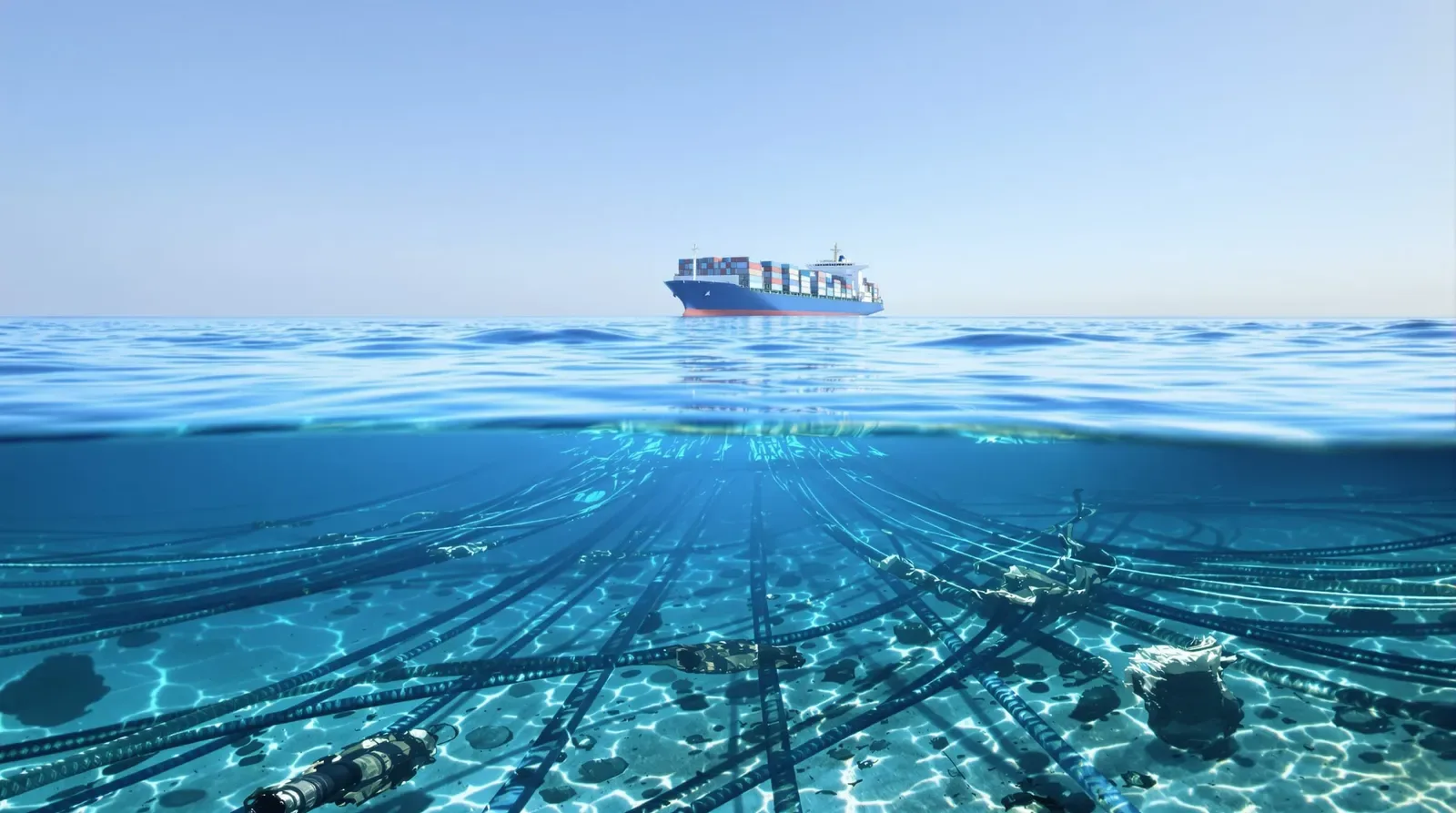
Key undersea cable systems, the South East Asia–Middle East–Western Europe 4 (SMW4) and India-Middle East-Western Europe (IMEWE), suffered disruptions in the Red Sea, causing widespread internet connectivity issues across Asia, the Middle East, and West Asia. These cables are pivotal for regional traffic, and the cuts have slowed internet services for millions, particularly in nations such as India and Pakistan. Monitoring agency NetBlocks confirmed significant degradation of internet services, with some regions experiencing heightened latency. Technical rerouting mitigated the impact outside the Middle East, but core services, including major cloud providers like Microsoft in the affected areas, reported notable delays.
The SMW4 cable is owned and managed by Tata Communications, while the IMEWE cable is operated under a consortium, including Alcatel Submarine Networks. Both entities are yet to issue a public commentary on the disruptions. In the wake of the outages, Pakistan Telecommunications formally acknowledged the cable cuts but did not elaborate on restoration timelines. Governments elsewhere, notably in Saudi Arabia and the UAE, have maintained silence despite reports of slower speeds on state-managed networks such as Etisalat.
Although the specific cause behind the cable damage remains unconfirmed, tensions in the region—especially in the wake of ongoing conflict linked to Yemen’s Houthi rebels—provide critical geopolitical context. Claims regarding deliberate sabotage have emerged amid speculation that the disruptions may be tied to broader hostile activities. The Houthis, historically known for engaging in infrastructure attacks, formally denied involvement. This happens against a backdrop of heightened regional strain exacerbated by the Israel-Hamas conflict in Gaza, complicating clarity on whether the cable cuts are incidental or targeted.
The disruptions also underline vulnerabilities in the maritime infrastructure supporting critical communications. The Red Sea sees heavy reliance on subsea cables for intercontinental internet traffic, and the lack of immediate restoration announcements raises concerns about the durability of regional connectivity mechanisms. Reports on geopolitical maneuverings, including speculation over retaliatory activities tied to the Iran-Israel-U.S. triangle, add a layer of complexity to interpreting the implications of sustained outages as the situation develops.
Why this matters
Undersea cables play a central role in global connectivity and are integral to the maritime domain due to their reliance on subsea installations. Disruptions to these systems create cascading effects on operational performance for telecom operators and cloud service providers, triggering increased latency and service degradation in affected regions. Maritime operators, including those engaging with digital charting systems or fleet coordination software, are indirectly impacted when network access slows down in major markets like India.
At a geopolitical level, damage to cables reinforces the vulnerability of maritime infrastructure amid regional conflicts. Security enhancements for high-traffic subsea communication lines could be demanded, particularly in choke points like the Red Sea. Shipping companies may also face elevated risks, as unexplained subsea disturbances can contribute to higher war-risk insurance premiums for fleets transiting conflict-prone waters.
The combined tension in the Red Sea and marine infrastructure underscores the risks posed to global trade continuity. Stakeholders including operators, cable owners, and governments are under increasing pressure to address vulnerabilities and stabilize affected routes before long-term disruptions arise. Attention now turns to the timeline for cable repairs and whether growing geopolitical instability will further undermine maritime and communication systems critical to trade and connectivity.