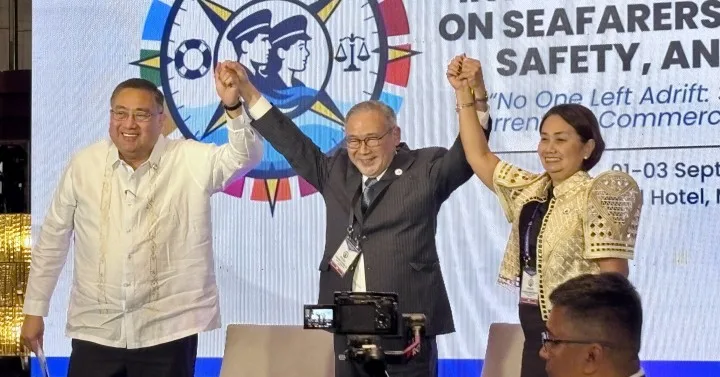
On September 2, 2025, the Philippine government hosted the International Conference on Seafarers’ Human Rights, Safety, and Well-Being at the Manila Diamond Hotel, culminating in the unveiling of the Manila Declaration. This newly adopted framework aims to strengthen protections for seafarers, addressing critical issues such as health crises, workplace safety, and maritime conflicts. The declaration, adopted with initial endorsements from ten countries, including Bangladesh, Germany, Malaysia, and the United Kingdom, comprises eight commitments designed to promote seafarers' welfare and defend their rights.
Key provisions of the Manila Declaration include comprehensive enforcement of the Maritime Labor Convention (MLC), recognizing seafarers’ rights to refuse unsafe assignments without reprisal, and improved preparedness for global crises. The declaration also emphasizes the importance of corporate responsibility in human rights adherence, inclusion of women in the maritime workforce, and adapting to challenges posed by digitalization and decarbonization. Additionally, it advocates for greater international collaboration in maritime training and education, a core step toward addressing future industry labor demands.
According to Carlos Sorreta, the Philippines’ Permanent Representative to the United Nations in Geneva, the declaration represents a progressive vision for the maritime sector, anticipating emergent issues tied to industry evolution. The Philippine government has appealed to maritime stakeholders worldwide to support the initiative, signaling its commitment to expanding adherence and building actionable outcomes. Over 200 delegates from more than 40 countries attended the conference, with prominent figures such as Foreign Affairs Secretary Ma. Theresa Lazaro and Maritime Industry Authority Administrator Sonia Malaluan highlighting the nation’s longstanding dedication to safeguarding seafarers.
The Philippines, known for its significant contributions to the global seafaring workforce, has demonstrated a proactive approach in protecting its maritime personnel. This includes repatriating Filipino seafarers affected by conflicts such as the Houthi attacks in Red Sea waters. Further reflecting this leadership, the country sponsored a landmark resolution at the United Nations Human Rights Council in 2024, becoming the first to officially recognize the societal contributions of seafarers.
Why this matters
The adoption of the Manila Declaration is poised to influence global regulatory and operational standards for seafarers. For shipowners and operators, stricter enforcement of the Maritime Labor Convention could mean increased oversight in labor practices and employment conditions. Seafarers now have formalized protections to refuse operations in high-risk areas, which could reshape the risk assessment frameworks for certain trading corridors and encourage heightened corporate accountability.
Furthermore, the focus on digitalization and decarbonization places responsibility on maritime enterprises to prepare their workforce for transformational changes. Investments in technology training, alongside compliance with increasingly stringent environmental targets, will likely become an operational necessity. Maritime education institutions and training providers will also see amplified demand, driven by the declaration’s emphasis on fostering international cooperation.
With the Manila Declaration in motion, attention turns to its adoption by other maritime nations and its integration within existing industry frameworks. The response of major flag states and classification societies to the declaration will provide critical indicators of its broader impact on seafarer rights enforcement and global shipping standards.