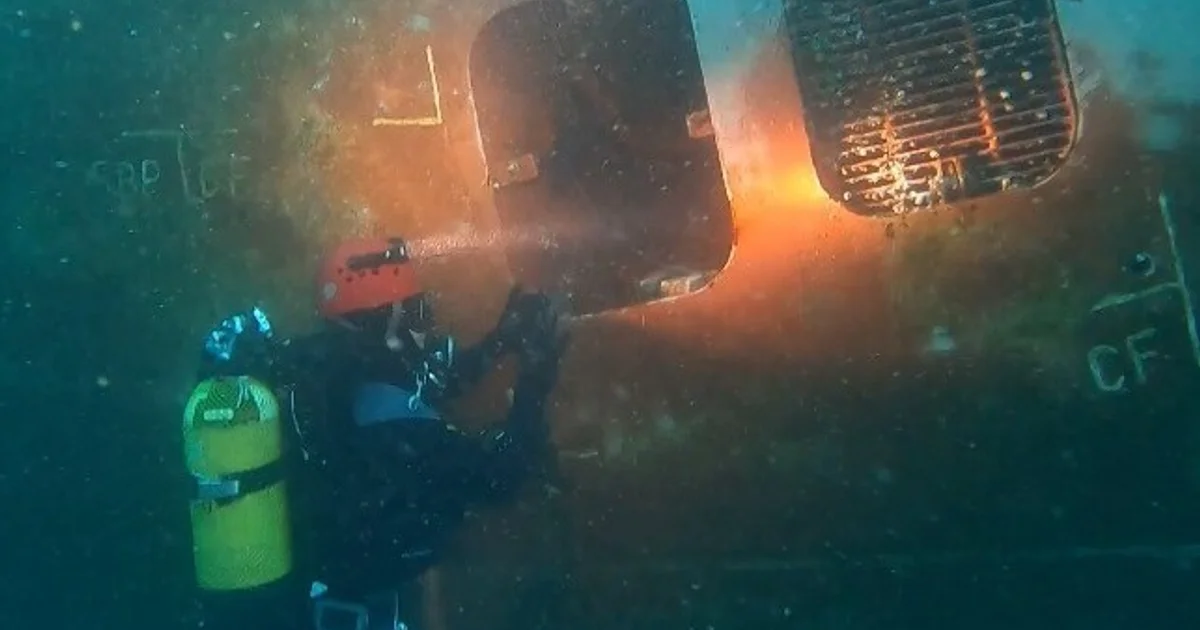
Spanish police intercepted a supply boat and arrested three individuals in connection with a major cocaine smuggling operation at the port of Las Palmas, in the Canary Islands. The seizure unveiled a total of 72 kilograms of the narcotic concealed in both the vessel's sea chest and onboard the supply boat, marking the latest crackdown against drug trafficking in the region.
According to Guardia Civil, law enforcement initially became suspicious of a supply vessel routinely servicing anchored ships in Las Palmas harbor. Upon boarding and inspecting the boat, authorities found a suitcase containing several packets of cocaine. Subsequent searches unearthed diving equipment allegedly used to access merchant vessels’ hulls for smuggling activities. A specialized dive team later discovered another package with cocaine bricks hidden inside the sea chest of the merchant ship believed to be part of the operation.
The drugs seized, worth an estimated $2.5 million on the European market, were taken as evidence along with the arrested individuals. The suspects have been transferred to a criminal court in Las Palmas for prosecution. This operation follows broader efforts by Spanish authorities to stem cocaine trafficking in the Canary Islands, where recent busts captured four tonnes of cocaine, over $114,000 in cash, and led to the arrests of 48 individuals suspected of being involved in a sophisticated smuggling network.
Guardia Civil reported that this network relied on multiple speedboats, encrypted communication methods, and satellite technology to extract cocaine from vessels at sea and ferry it to the islands. The Canary Islands, situated strategically between South America and Europe, have increasingly served as a key transit hub in the global cocaine trade—a development that places immense pressure on local law enforcement resources.
Why this matters
The use of supply boats and sea chests for drug trafficking highlights a growing abuse of maritime operations, elevating scrutiny on ancillary services such as vessel servicing. Port operators face heightened risks, as illicit activities compromise legitimate operations, damage reputations, and potentially deter cargo and vessel throughput.
Operators and shipowners must now contend with enhanced inspections and boarding procedures at ports where drug trafficking routes intersect with commercial shipping. This may lead to delays, increased compliance costs, and disruptions to established scheduling. Additionally, supply chain stakeholders are exposed to reputational risks if vessels under their management are targeted by traffickers.
The expanded use of encrypted communications and satellite technology by drug networks adds complexities to maritime supply routes and security—requiring closer cooperation between shipping companies, port authorities, and law enforcement agencies to identify and mitigate smuggling risks.
As enforcement activities intensify, port operators within the Canary Islands and beyond must prepare for stricter security protocols and potential disruptions, especially for vessels arriving from high-risk transit regions like South America. Individual operators will need to balance operational efficiency with compliance to avoid becoming inadvertent participants in criminal activities.