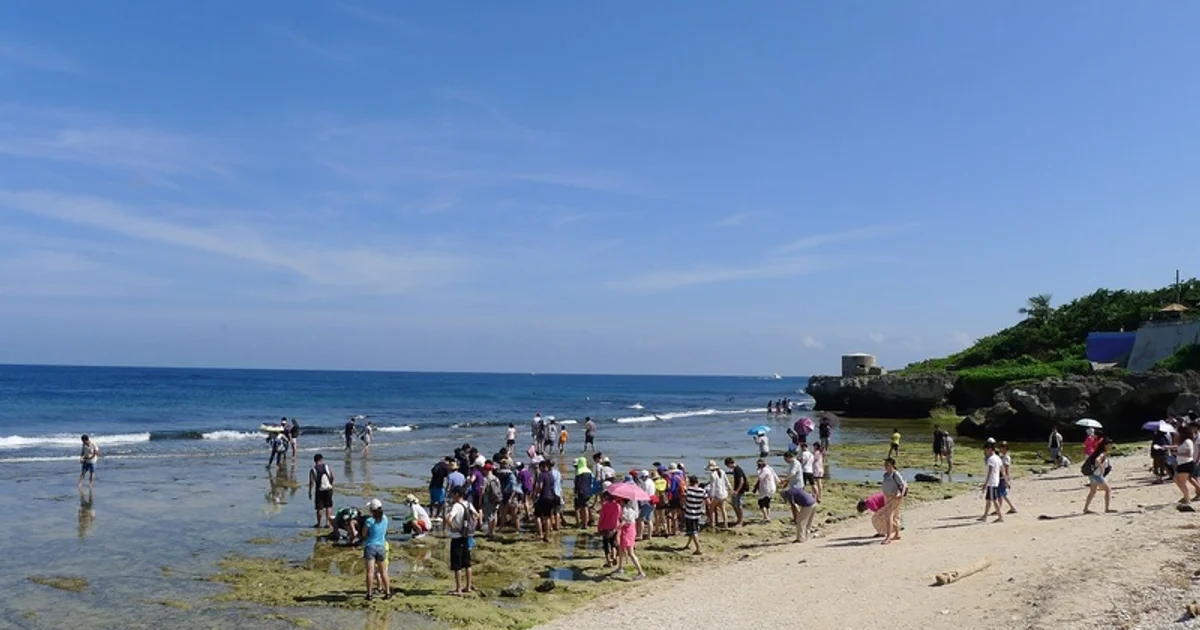
On December 11, Taiwan's Control Yuan issued corrective directives to four government agencies, targeting actions to address the significant decline of coral reefs in Xiaoliuqiu. Findings from a report commissioned by Control Yuan members Dr. Lin Sheng-fong and Fan Sun-lu reveal a staggering drop in live coral coverage, from 30% to 50% before 2015 to just 11.9% between 2021 and 2023, the lowest reported coverage nationwide. Factors cited in the report include tourism-related pressures, such as the impact of snorkelers and intertidal activities, compounded by inadequate environmental management practices.
The Control Yuan’s investigation singled out four agencies—Dapeng Bay National Scenic Area Headquarters (DBNSAH), the Tourism Administration, the Ocean Affairs Council, and the Pingtung County Government. These bodies were identified as contributing to the deterioration of Xiaoliuqiu’s marine ecosystem, primarily due to ineffective oversight of tourist activities and insufficient sewage management. The DBNSAH faced particular scrutiny for failing to develop sustainable tourism strategies despite commissioning a study to assess tourism capacity. According to the Control Yuan, the study omitted critical analysis of ecological stress caused by popular seaside attractions. This gap has allowed overtourism to proliferate unchecked, exacerbating environmental degradation.
The Ocean Affairs Council, which had previously recommended tighter restrictions on tourist influx as early as 2022, was criticized for failing to enforce necessary assessments until this year. Meanwhile, the Tourism Administration drew criticism for its inadequate supervision of the DBNSAH’s initiatives and delays in addressing tourism management concerns. The Pingtung County Government faced reproach for its poor oversight of intertidal zones and failure to designate coral reefs as protected species within marine protected areas, leaving Xiaoliuqiu vulnerable to further ecological damage.
Additional findings noted deficiencies in wastewater treatment infrastructure on Xiaoliuqiu. The inadequate facilities result in elevated nutrient salt levels, creating conditions for harmful algal blooms that further strain coral ecosystems. The Control Yuan highlighted Taiwan’s lenient nutrient salt pollution standards, urging the Ocean Affairs Council to adopt stricter regulations similar to those in neighboring countries. Despite restrictions being imposed on tourist numbers last year, enforcement gaps remain, particularly in intertidal zones, where unchecked tourism continues to pose risks to reef recovery.
Why this matters
The deterioration of Xiaoliuqiu’s coral reefs underscores a broader challenge in balancing environmental protection with economic reliance on tourism. Live coral coverage serves as a vital indicator of marine health, affecting biodiversity, fisheries, and coastal resilience. With coral reefs occupying a crucial role in maritime ecosystems, disruption can have cascading consequences for local economies, fisheries, and tourism revenue.
The Control Yuan’s assessment points to operational weaknesses across government agencies responsible for managing marine environments. Inadequate sewage treatment and lax enforcement of marine protection laws expose coral reefs to persistent stress, limiting recovery potential. For operators such as eco-tourism providers and marine recreation businesses, stricter enforcement and reduced tourist numbers could reshape operating models, potentially requiring greater investment in sustainable practices.
Additionally, international comparisons of nutrient salt regulations highlight competitive gaps for Taiwan’s maritime governance. Stricter environmental standards could align Taiwan more closely with global benchmarks, enhancing ecological outcomes but necessitating costly infrastructure upgrades for wastewater treatment facilities.
The Control Yuan’s directive places new pressure on agencies to act decisively in reversing ecological damage. Operators and local authorities will need to adapt swiftly to emerging regulatory demands as Xiaoliuqiu’s coral reef health remains a critical focal point for marine conservation efforts.