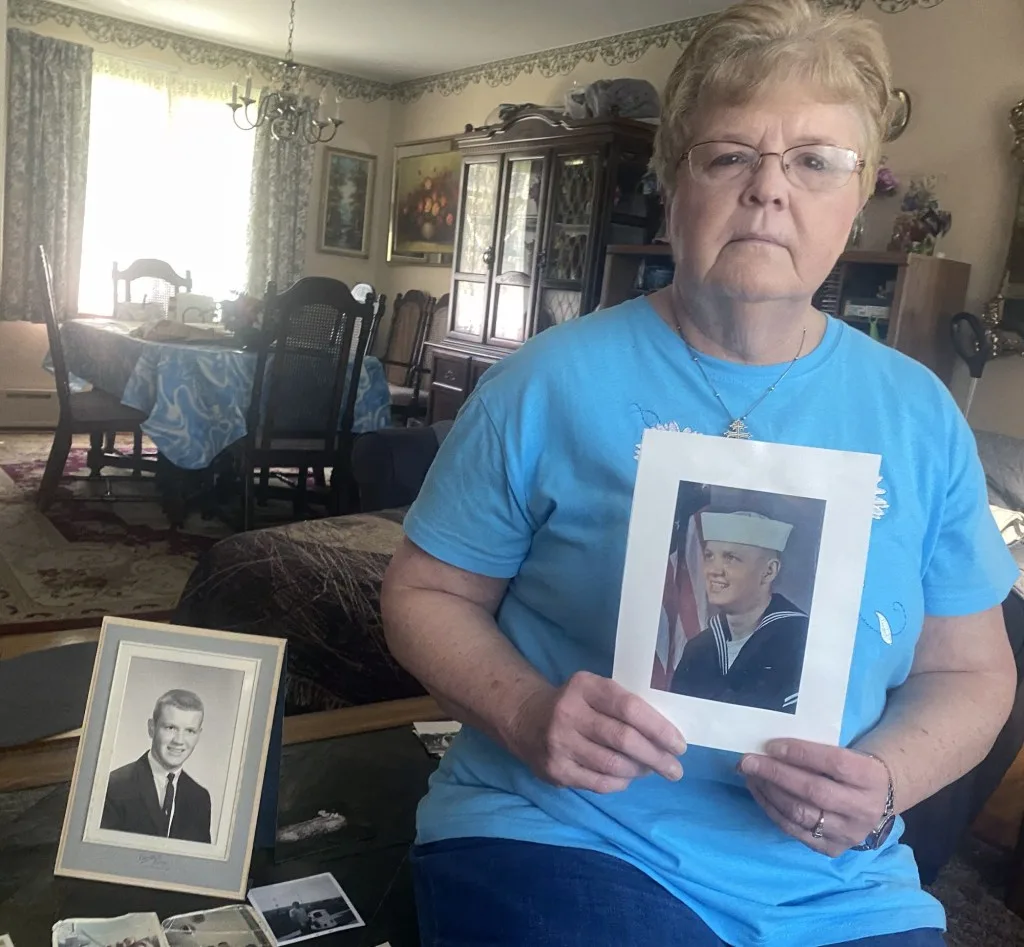
Third Class Petty Officer Ronald P. Yuhas, who perished in Vietnam aboard a U.S. Navy landing craft struck by a North Vietnamese rocket on February 25, 1969, is finally being brought home to American soil after 56 years. His remains arrived at Philadelphia International Airport on May 29 to a solemn reception attended by family members. Yuhas was one of over 25 sailors who lost their lives in the attack in Da Nang harbor. A funeral service is scheduled for June 12 at Walukiewicz-Oravitz Fell Funeral Home, with his final interment set for Arlington National Cemetery on June 23, carried out with full military honors.
Yuhas enlisted in the U.S. Navy shortly after graduating high school in his hometown of Shenandoah, Pennsylvania. He was only 17 years old, requiring his parents’ consent to serve his country at such a young age. His family’s military legacy runs deep—Ronald’s father, Peter Yuhas, was a decorated veteran of World War II who served in multiple theaters of war. Ronald’s upbringing in a close-knit and community-focused family saw him active in local sports and serving as an altar boy. Shenandoah residents felt the impact of his service and sacrifice profoundly; upon his death, then-Mayor Albert J. Matunis declared an official day of mourning. The grief of the town mirrored that of the Yuhas family.”
The effort to bring Ronald Yuhas home began in earnest following Peter Yuhas's passing in 2018. For decades, Ronald’s remains had rested in the U.S. Naval Cemetery in Guam, their initial identification proving inconclusive at the time of his death. The determination to honor Yuhas’s service and legacy drove his sister, Marlene McGrath, a retired nurse, and brother-in-law Patrick McGrath, to navigate complex legal and logistical barriers. Despite a government refusal to fund his repatriation on the grounds he had already received a proper burial, the McGrath family financed the disinterment and transportation themselves. The process culminated in an emotional reunion on the airport tarmac as Yuhas’s casket was respectfully unloaded to a somber announcement.
The community of Shenandoah and the Yuhas family will have an opportunity to pay their respects after years of collective mourning. For Marlene McGrath, this moment is bittersweet, blending sadness over her brother’s ultimate sacrifice with relief that his final resting place will reflect the honor he earned in service of his nation.
Why this matters
The return of Ronald P. Yuhas underscores the enduring commitment that families, communities, and national institutions have to repatriating fallen servicemen and ensuring they receive dignified burials. For the maritime sector, particularly naval operations, his story symbolizes the risks faced by personnel stationed aboard landing craft in contested waters during war—a legacy of sacrifice tied directly to fleet deployments in high-risk regions.
It also brings attention to the logistical complexities tied to disinterment and repatriation processes, particularly for remains originally interred in overseas military cemeteries. Families often face unexpected financial burdens, compounded by bureaucratic hurdles, when seeking to reclaim the bodies of loved ones who were classified as unidentified in earlier eras. This can prompt questions about policy reforms aimed at easing these burdens for military families.
Finally, this case highlights the importance of advocacy, as demonstrated by Patrick McGrath’s persistence in securing Ronald’s homecoming despite initial refusals. It reflects a broader theme of determination among private citizens to challenge procedural barriers in pursuit of closure and respect.
The final burial of Ronald P. Yuhas with full military honors in Arlington National Cemetery symbolizes a conclusion to decades of advocacy and grief. More broadly, it marks a poignant reminder of the sacrifices made by naval personnel operating in volatile theaters, while offering lessons in policy considerations regarding the treatment of military families seeking closure.