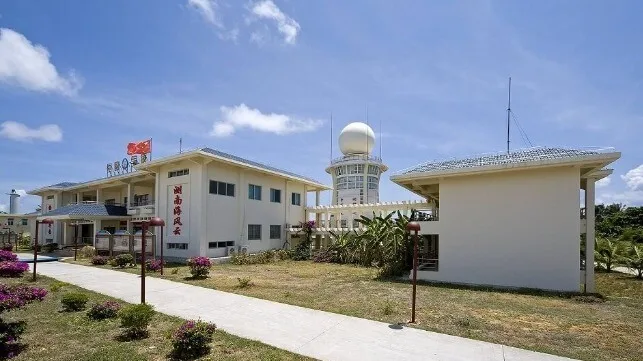
Vietnam is vocally protesting China’s installation of two automatic ship identification stations in the disputed Paracel Islands. Launched two weeks ago, these stations leverage China’s BeiDou satellite system and connect to land-based Automatic Identification System (AIS) receivers. China’s state broadcaster CCTV stated that these ground stations are intended to address the “blind spot” in shore-based ship tracking in the waters surrounding the Paracels. According to Chinese maritime regulations, all vessels within its claimed territories are required to carry an AIS transponder and keep the signal active.
However, the Vietnamese government regards the establishment of these AIS stations as a violation of its sovereignty. The Paracel Islands, which have been under Chinese occupation since 1974, are heavily fortified by the People’s Liberation Army. Yet, Vietnam continues to assert its claim over the archipelago. Vietnamese Ministry of Foreign Affairs spokesperson Pham Thu Hang emphasized that any activity regarding the Paracel Islands without Vietnam’s consent is viewed as invalid and a breach of its territorial rights.
Additionally, the Ministry stands firm on its jurisdiction over both the Paracel and nearby Spratly Islands. The dispute over these territories has historical roots, as China has reinforced its sovereignty claims by establishing an administrative center, “Sansha City,” on Woody Island, the largest island in the Paracel group, in 2012. This center serves as a hub for China’s territorial ambitions in the South China Sea.
Vietnam’s concerns are compounded by rising regional tensions. The protest against China’s AIS ground stations coincides with the Philippines’ removal of a 1,000-foot floating barrier previously installed by the China Coast Guard at the disputed Scarborough Shoal. This series of escalating incidents has heightened the urgency for regional allies to address maritime disputes.
In response to the ongoing conflicts within the South China Sea, the ASEAN bloc has stated that it is in the process of finalizing a Code of Conduct (CoC) aimed at mediating the multiple maritime disputes, including those involving China. This initiative seeks to foster dialogue and possibly stabilize tensions in a region marked by strategic competition and national interests.
As Vietnam and other ASEAN nations navigate these maritime challenges, the situation in the South China Sea remains fluid, highlighting the pressing need for diplomatic solutions to these long-standing claims and disputes.