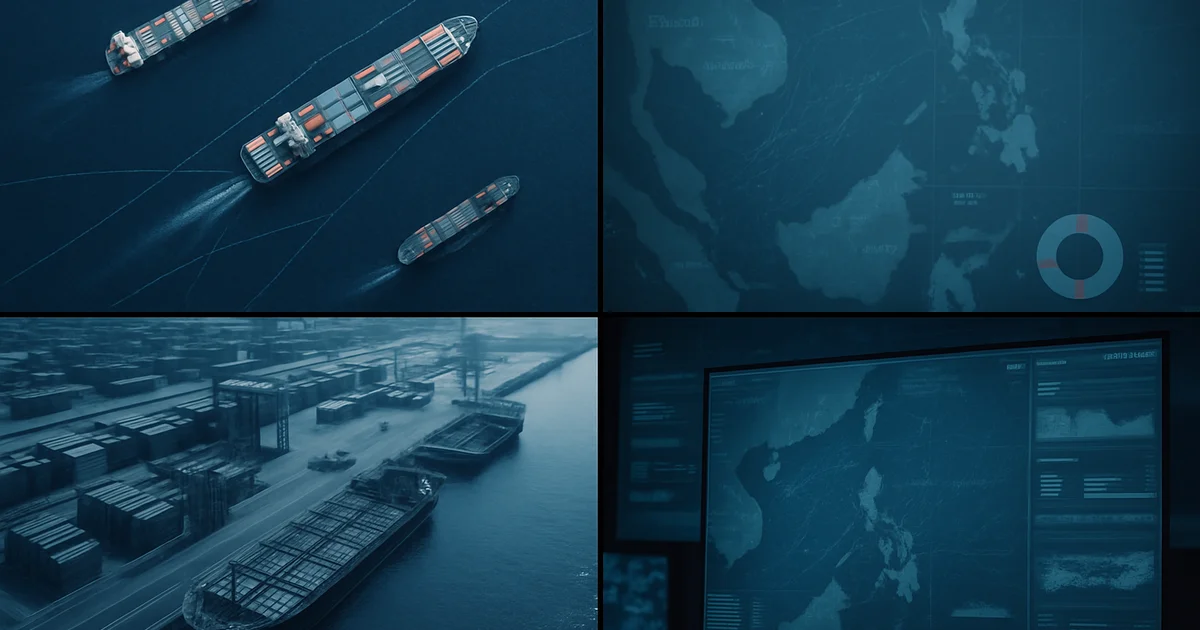
The intensification of ASEAN maritime security activities in the South China Sea underscores the region's strategic pivot towards collective defense amid rising tensions with China. Eleven naval vessels from eight nations, including the United States and Singapore, participated in joint exercises in the West Philippine Sea, signaling a robust multilateral response to China's assertive maritime actions. This development highlights the increasing importance of regional cooperation in safeguarding maritime security and freedom of navigation in contested waters.
Top Strategic Developments
-
U.S. Maritime and Trade Groups Oppose Reinstatement of China-Built Vessel Fees
Why this matters for shipping: Reinstating fees could disrupt U.S.-China maritime trade relations and impact vessel procurement strategies.
U.S. maritime and trade groups have expressed opposition to the potential reinstatement of fees on China-built vessels, arguing it could harm trade relations and increase costs for U.S. shipping companies.
-
Eleven Naval Vessels from Eight Nations Engage in ASEAN Maritime Security Joint Activity in West Philippine Sea
Why this matters for shipping: This joint activity strengthens regional maritime security alliances against China's assertive actions.
A multinational fleet of eleven naval vessels from eight countries, including the U.S., Australia, and Japan, conducted joint maritime security exercises in the West Philippine Sea, demonstrating a unified stance on regional security.
-
China Coast Guard Collides with Philippine Patrol Vessel Amid Diplomatic Tensions
Why this matters for shipping: The collision exacerbates diplomatic tensions and could lead to increased military presence in disputed areas.
A China Coast Guard vessel collided with a Philippine patrol vessel in the South China Sea, escalating diplomatic tensions and raising concerns over maritime safety and sovereignty.
Theme of the Week
Escalating Maritime Tensions in the South China Sea
The South China Sea has become a focal point of maritime tensions, with increased military activities and diplomatic incidents involving China and ASEAN nations. This week's joint naval exercises and vessel collisions highlight the strategic importance of these waters.
- Eleven Naval Vessels from Eight Nations Engage in ASEAN Maritime Security Joint Activity in West Philippine Sea
- China Coast Guard Collides with Philippine Patrol Vessel Amid Diplomatic Tensions
Forward outlook: Expect heightened military readiness and further joint exercises in the South China Sea over the next 4–8 weeks as ASEAN nations and their allies seek to deter Chinese assertiveness. Diplomatic engagements may intensify to manage tensions and prevent further incidents.
Maritime Security & Geopolitics
Rising tensions in the South China Sea are prompting increased military activities and strategic alliances among ASEAN nations and global powers.
Regional Watch
Greater China
China's assertive maritime actions in the South China Sea are increasing regional tensions.
Operational impact: Shipping routes in the South China Sea may face disruptions due to heightened military activities and diplomatic tensions.
United States
U.S. maritime groups are opposing new fees on China-built vessels, citing trade concerns.
Operational impact: Potential reinstatement of fees could affect U.S. vessel procurement and trade with China.
Singapore & Southeast Asia
ASEAN nations are conducting joint maritime security exercises in response to regional tensions.
Operational impact: Increased military presence in Southeast Asian waters could impact commercial shipping operations.
AI Adoption & Digital Transformation Watch
No material AI or digital transformation developments crossed the wire this week.
ESG & Sustainability Watch
No significant emissions, sustainability, or decarbonisation developments were reported this week.
Executive Watch List
Five items maritime leaders should track over the coming week.
- ASEAN defense ministers meeting on South China Sea security scheduled for 15 October.
- Potential U.S. decision on reinstating China-built vessel fees expected by end of October.
- China's next maritime policy announcement anticipated in early November.
- Philippine government response to recent maritime collision to be issued next week.
- Sinokor Maritime's potential vintage VLCC sales developments to be monitored.
Maritime Fairtrade Weekly Edition #202609-4 — executive intelligence briefing synthesising 4 compliant stories this week.
Past Editions
- Issue #202609-3 20 Sept 2026 Asia Maritime Intelligence
- Issue #202609-2 13 Sept 2026 Asia Maritime Intelligence
- Issue #202609-1 6 Sept 2026 Asian shipping embraces nuclear and digital innovations amid port congestion challenges
- Issue #202608-5 30 Aug 2026 Asia Maritime Intelligence
- Issue #202608-4 23 Aug 2026 Asia Maritime Intelligence
- Issue #202608-3 16 Aug 2026 Asia Maritime Intelligence