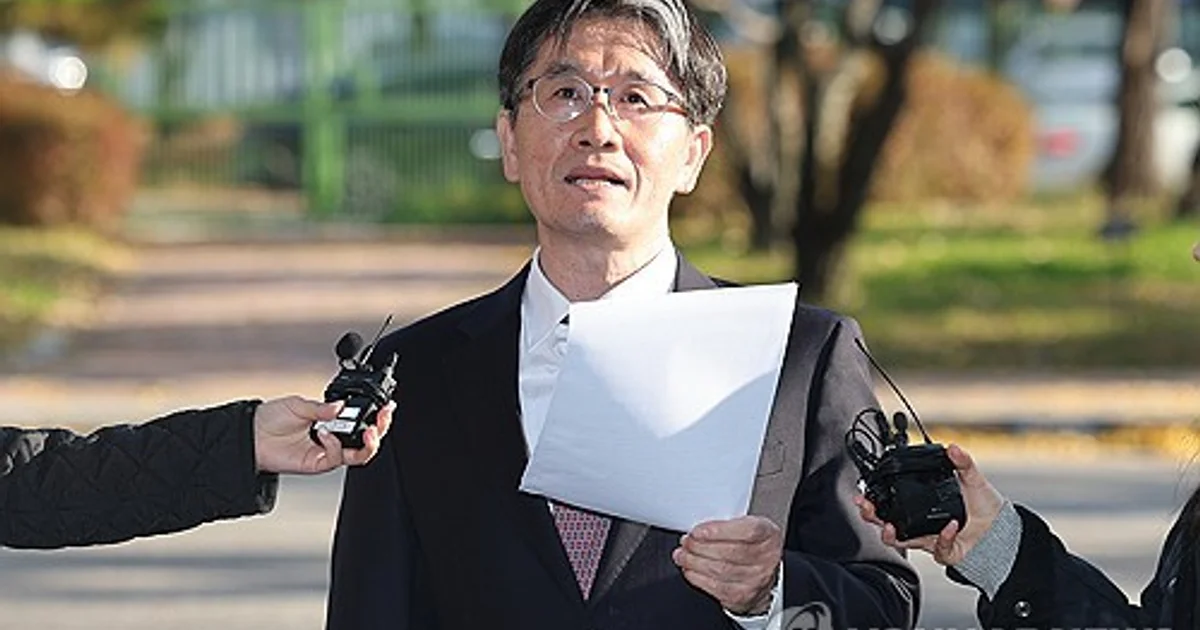
South Korea's Corruption Investigation Office for High-ranking Officials (CIO) is under scrutiny following the announcement of an indictment against its chief, Oh Dong-woon, and deputy, Lee Jae-seung. The special counsel team disclosed the charges on November 26, 2023, citing dereliction of duty in handling allegations tied to the death of Marine Corporal Chae Su-geun in July 2023. This marks the first-ever indictment of CIO leadership since the agency was founded in 2021.
The charges arise from the CIO’s delayed response to a criminal complaint against one of its own prosecutors, Song Chang-jin, who is accused of perjury related to his testimony before the National Assembly. Democratic Party lawmakers alleged that Song, during his parliamentary testimony, misrepresented his awareness of individuals linked to Cpl. Chae's death. Under South Korean law, the CIO was obligated to notify the Supreme Prosecutors Office about the complaint. However, the agency reportedly failed to act for 11 months, prompting accusations that its leadership viewed the matter as politically charged rather than as a legal obligation.
Further investigation revealed possible obstruction of justice within the CIO. Prosecutor Song Chang-jin is separately indicted on charges of abuse of authority for allegedly impeding efforts to obtain search-and-seizure warrants targeting then-President Yoon Suk Yeol and former Defense Minister Lee Jong-sup. These warrants were connected to the Marine fatality investigation. The special counsel suspects that this obstruction may have been an attempt to shield President Yoon from inquiry, raising concerns about improper political influence.
The legal developments extend beyond the CIO, as former President Yoon himself faces allegations of undue interference in military investigative processes tied to Cpl. Chae’s death. Accusations against Yoon’s administration and high-ranking officials underscore mounting political discord and allegations of corruption within South Korea’s governance frameworks. Calls for accountability have intensified amid claims of inadequate transparency in the handling of the Marine death case.
Why this matters
The indictment of the CIO's leadership is a pivotal moment for South Korea's accountability structures, potentially influencing protocols for agency oversight and governmental transparency. For maritime operators, the case also sheds light on broader vulnerabilities in institutional handling of sensitive military-linked fatalities, raising concerns about possible delays or obstructions in investigations that intersect with maritime environments or officer casualties.
The allegations surrounding President Yoon and his administration highlight the intersection of political influence with operational military decisions, a dynamic that could affect search-and-rescue operations or investigations involving seafarers and naval personnel. Transparency in such cases remains critical for maritime stakeholders, particularly in incidents with geopolitical ramifications.
Looking ahead, the ongoing investigations may lead to systemic changes in how criminal complaints within government agencies are processed, particularly in high-stakes cases involving fatalities. Additionally, maritime security and investigative standards could be scrutinized, with implications for both domestic and international partners operating in South Korean waters. Stakeholders should monitor the evolving legal landscape for potential disruptions in administrative handling of maritime and military investigations.