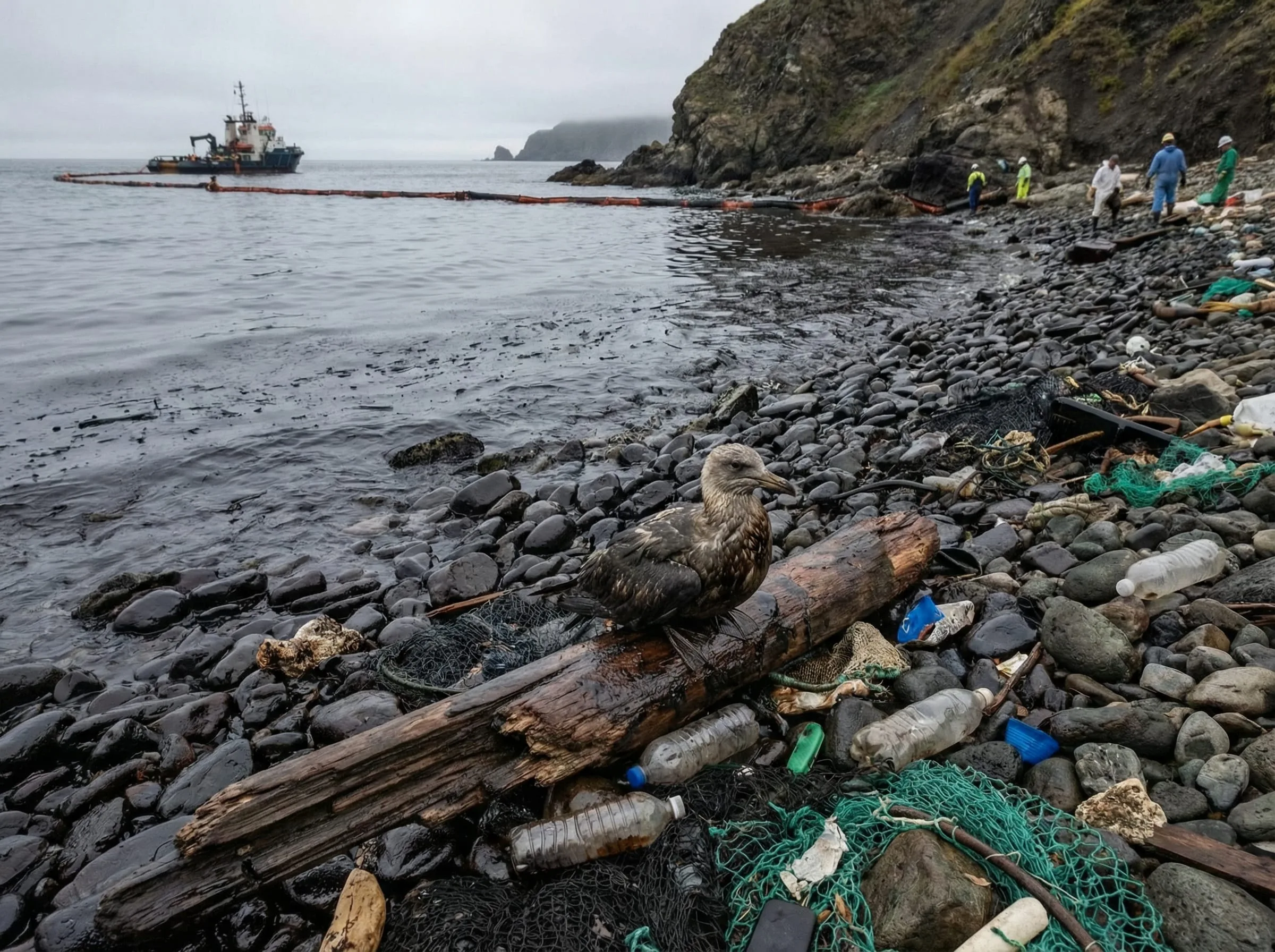
Marine pollution, with oil spills at the forefront, remains a significant environmental challenge for the maritime industry. High-profile incidents like the Exxon Valdez spill, the Deepwater Horizon disaster, and the MV Wakashio grounding illustrate the ecological, economic, and social repercussions of uncontained marine pollution. These events underline the necessity for proactive measures, coordinated responses, and enhanced international collaboration to mitigate future risks.
Oil spills primarily result from accidents involving tankers, ruptured pipelines, offshore drilling activities, or operational discharges. Marine pollution also encompasses non-petroleum contaminants such as plastics, chemicals, and sewage, all of which imperil marine ecosystems, fisheries, and coastal industries. Significant incidents, including the release of over 37,000 tonnes of crude oil during the Exxon Valdez spill in Alaska in 1989 and 10,000 tonnes of oil during the MV Wakashio grounding near Mauritius in 2020, highlight the catastrophic scale of some pollution events.
According to the International Maritime Organization (IMO), preventive regulations such as MARPOL have been instrumental in reducing pollution risks. These include protocols for oil discharge, ballast water management, and waste control. Operational best practices, such as the widespread adoption of double-hulled tankers, stringent vessel maintenance schedules, and advanced cargo handling systems, further reduce vulnerabilities. Additionally, innovations in real-time monitoring, automated shut-off valves, and leak detection systems provide layers of protection against accidental oil releases.
Preparation and response strategies remain critical when prevention measures fail. Containment techniques, like deploying booms and barriers, are often complemented by recovery operations utilizing pumps and absorbents. Remediation efforts, ranging from shoreline cleanups to wildlife rescue programs, aim to restore affected environments. Techniques like bioremediation, which employs microorganisms to break down oil residues, are increasingly common. Rapid intervention remains central, as evidenced by the coordinated response to the MV Wakashio spill, where local and international teams mobilized to protect coral reefs and tourism-reliant coastal areas.
International cooperation plays a pivotal role in addressing oil spills. Frameworks such as the OPRC Convention and regional initiatives like the Regional Marine Pollution Emergency Response Centre for the Mediterranean Sea (REMPEC) facilitate joint action and resource sharing. Platforms for exchanging technical expertise, conducting training, and maintaining preparedness further bolster global resilience. Lessons from historical incidents emphasize the importance of these collaborations; for instance, the Exxon Valdez spill's legislative aftermath resulted in the US mandating double-hull designs under the Oil Pollution Act of 1990.
Why this matters
Oil spills represent a direct operational risk for tanker owners, offshore operators, and cargo handlers. Environmental damages often lead to public backlash, regulatory scrutiny, substantial cleanup costs, and trading disruptions. The Exxon Valdez spill forced industry shifts toward double-hulled ship designs, while Deepwater Horizon highlighted failures in risk assessment and blowout preventers. These precedents demonstrate the price of non-compliance with prevention measures.
For insurance providers and P&I clubs, oil spill liability presents significant exposure, often involving multi-jurisdictional claims and protracted litigation. On the trade side, incidents affecting chokepoints such as port approaches can disrupt cargo schedules and reroute supply chains. From a geopolitical standpoint, coordinated international frameworks like REMPEC ensure collective readiness but also underscore the gaps in regional capacity.
For shipowners operating in sensitive coastal areas, strict adherence to MARPOL and regional rules is increasingly non-negotiable. This includes the integration of spill detection and prevention technologies, maintaining adequate stockpiles of response equipment, and participating in joint exercises to build operational muscle for live emergencies.
Looking ahead, industry stakeholders must monitor upcoming regulatory tightening, such as amendments to MARPOL protocols, while accelerating investments in clean technologies. As the scale of the MV Wakashio incident demonstrated, rapid response capabilities combined with robust partnerships must remain the standard for minimizing the environmental and commercial fallout of oil spills.